
10 Alarming Toxic Relationship Signs and How to Recognize Them
Table of Contents
- Introduction
- What Is a Toxic Relationship?
- 10 Common Toxic Relationship Signs
- Sign 1: Constant Criticism
- Sign 2: Jealousy and Possessiveness
- Sign 3: Manipulation and Gaslighting
- Sign 4: Lack of Support or Resentment
- Sign 5: Passive-Aggression and Blame-Shifting
- Sign 6: Dishonesty or Betrayal
- Sign 7: Emotional Exhaustion
- Sign 8: Isolation from Friends and Family
- Sign 9: Disrespecting Boundaries
- Sign 10: Control Over Your Life Decisions
- The Impact of Toxic Relationship Signs on Your Health and Life
- Can a Toxic Relationship Be Fixed?
- How to Leave a Toxic Relationship Safely
- Conclusion
- FAQ
- Key Takeaways
Introduction
Have you ever felt drained, anxious, or walking on eggshells after spending time with your partner? Toxic relationship signs can be subtle at first but often involve recurring patterns that erode trust, respect, and your overall well-being. Many people confuse these warning signals for normal ups and downs, yet recognizing them early is crucial.
In this guide, you’ll learn the red flags that indicate a relationship may be harmful, the psychological and emotional impacts, and practical ways to cope or leave safely.
What Is a Toxic Relationship?
Definition and Key Characteristics
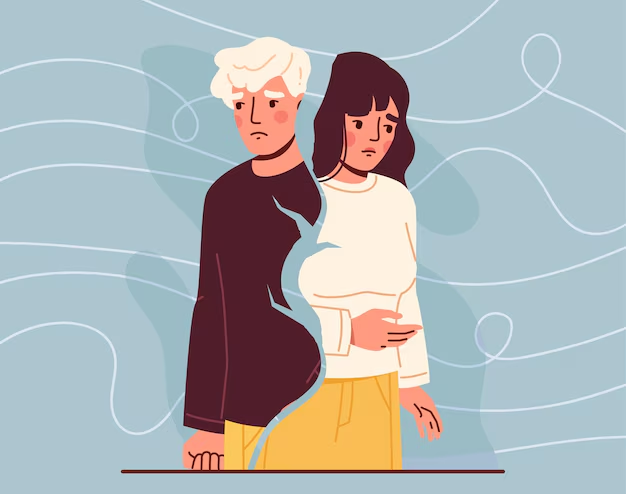
A toxic relationship occurs when patterns of behavior consistently harm one or both partners. While no relationship is perfect, toxic dynamics often include:
- Manipulation and control: One partner dictates decisions or emotions.
- Emotional abuse: Constant criticism, humiliation, or belittling.
- Neglect of needs: Your feelings, opinions, and well-being are disregarded.
Unlike healthy disagreements, toxic patterns repeat and escalate over time. A relationship may start well but gradually shift toward these harmful behaviors. Recognizing these signs early can prevent emotional and physical consequences.
10 Common Toxic Relationship Signs
Here are the most frequent toxic relationship signs that many people overlook or normalize:
Sign 1: Constant Criticism or Belittling
- What it looks like: Frequent negative remarks, mocking, or undermining your choices.
- Why it’s toxic: Erodes self-esteem and confidence, making you feel “never good enough.”
- What to do instead: Set boundaries, seek counseling, and surround yourself with supportive people.
Sign 2: Jealousy and Possessiveness
- What it looks like: Your partner monitors your interactions, accuses you of flirting, or isolates you.
- Why it’s toxic: Restricts personal freedom and can escalate into emotional abuse.
- What to do instead: Communicate openly and reinforce personal boundaries.
Sign 3: Manipulation, Gaslighting, or Guilting
- What it looks like: You constantly question your memory or perception because your partner denies facts.
- Why it’s toxic: Leads to confusion, self-doubt, and mental strain.
- What to do instead: Keep records of incidents, trust your instincts, and seek professional guidance.
Sign 4: Lack of Support, Resentment, or Score-Keeping
- What it looks like: Your achievements are ignored or minimized; they constantly bring up past mistakes.
- Why it’s toxic: Creates one-sided effort and emotional exhaustion.
- What to do instead: Establish clear expectations for mutual support and recognition.
Sign 5: Passive-Aggression, Blame-Shifting, or Unresolved Conflicts
- What it looks like: They refuse to communicate directly, blame you for problems, or never apologize.
- Why it’s toxic: Prevents resolution and builds resentment.
- What to do instead: Encourage open communication, set time-limited discussions, and consider mediation if needed.
Sign 6: Dishonesty or Betrayal
- What it looks like: Lies, secretive behaviors, or infidelity.
- Why it’s toxic: Breaks trust, creating insecurity and fear.
- What to do instead: Demand honesty or consider ending the relationship if trust cannot be restored.
Sign 7: Feeling Drained or Exhausted
- What it looks like: Constant emotional fatigue, stress, and anxiety around your partner.
- Why it’s toxic: Chronic stress impacts mental and physical health.
- What to do instead: Track emotional patterns and prioritize self-care.
Sign 8: Isolation from Friends and Family
- What it looks like: They discourage outside relationships, limiting your social circle.
- Why it’s toxic: You lose external support, making it harder to leave.
- What to do instead: Maintain outside connections and discuss independence openly.
Sign 9: Disrespecting Boundaries
- What it looks like: Ignoring personal space, time, finances, or emotional limits.
- Why it’s toxic: Undermines autonomy and creates tension.
- What to do instead: Clearly communicate boundaries and enforce consequences for violations.
Sign 10: Control Over Your Life Decisions
- What it looks like: They dictate your career, finances, or major life choices.
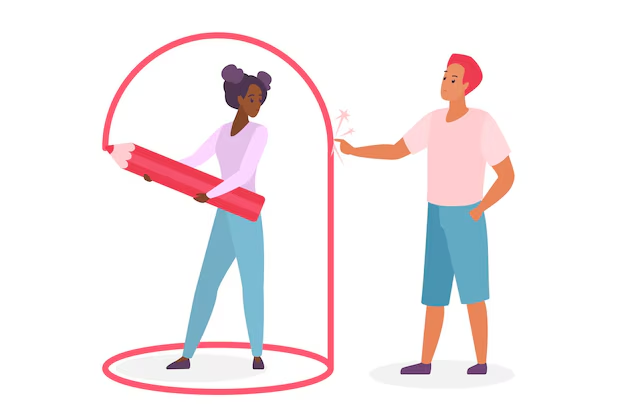
- Why it’s toxic: Diminishes self-confidence and traps you in dependency.
- What to do instead: Reassert autonomy and seek external advice or support.
The Impact of Toxic Relationship Signs on Your Health and Life
Chronic exposure to toxic dynamics can affect every aspect of life:
- Emotional: Anxiety, depression, low self-esteem, guilt.
- Mental: Confusion, obsessive thoughts, decision paralysis.
- Physical: Headaches, insomnia, digestive issues, fatigue.
- Social: Isolation, mistrust, damaged friendships.
- Work: Poor performance, frequent distraction, low motivation.
| Aspect | Healthy Relationship | Toxic Relationship |
|---|---|---|
| Emotional Well-being | Supported and validated | Constant stress, guilt, or fear |
| Communication | Open and honest | Avoidance, blame, gaslighting |
| Autonomy | Encouraged | Controlled, restricted |
| Conflict Resolution | Constructive | Escalation or avoidance |
Can a Toxic Relationship Be Fixed?
While some toxic behaviors can be addressed, improvement requires mutual effort:
- Mutual Willingness: Both partners must acknowledge patterns.
- Healthy Communication: Use “I” statements, avoid blame.
- Professional Support: Couples therapy or individual counseling.
- Boundaries and Accountability: Both partners respect limits.
Caveat: Not all relationships can be saved—especially when abuse, manipulation, or control are present. Your safety comes first.
How to Leave a Toxic Relationship Safely
- Recognize the Need: Acknowledge repeated toxic patterns and emotional harm.
- Seek Support: Trusted friends, family, or professional help.
- Create a Safety Plan: Especially if abuse is involved.
- Gradual or Direct Disengagement: Communicate clearly, remove shared access, and maintain no-contact if necessary.
- Self-Care After Leaving: Therapy, exercise, journaling, and rebuilding social connections.
Resources/Helplines:
- National Domestic Violence Hotline: 1-800-799-7233 (US)
- LoveIsRespect: 1-866-331-9474
Q1: Can toxic relationships improve?
A: Yes, but only if both partners are committed to change, seek professional help, and respect boundaries.
Q2: What’s the difference between toxic and abusive?
A: Toxic patterns can be emotionally harmful without physical abuse, while abusive relationships often involve physical, sexual, or severe emotional harm.
Q3: How do I know if I’m overreacting?
A: Reflect on repeated patterns, your emotional well-being, and whether friends or therapists notice concerning behaviors.
Q4: Are long-distance toxic relationships possible?
A: Yes. Signs may include manipulation through communication, emotional neglect, or jealousy, even without physical presence.
Key Takeaways
- Recognize toxic relationship signs early.
- Prioritize emotional and physical well-being.
- Set boundaries and communicate clearly.
- Seek support from friends, family, or professionals.
- Leaving is valid if harm persists; safety first.
Conclusion
Recognizing toxic relationship signs early is essential for your emotional, mental, and physical well-being. From constant criticism to controlling behaviors, these red flags indicate patterns that are unhealthy and unsustainable.
Final Advice: Trust your intuition—if a relationship feels more draining than supportive, prioritize your safety and well-being. You deserve respect, trust, and love. Healthier relationships are possible.
If you need more articles like that CLICK HERE